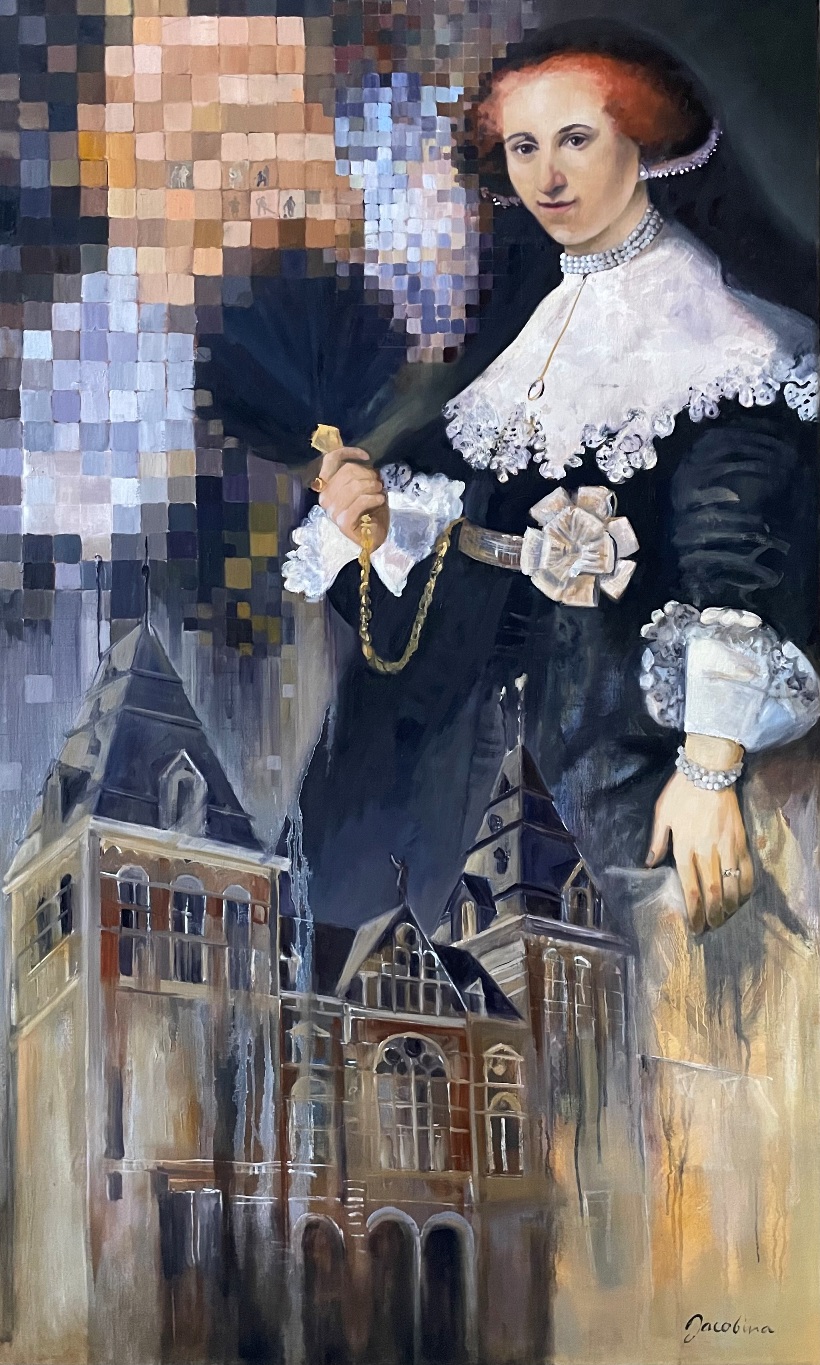
50″x 29″, Oil on Linen.
This work is inspired by a double wedding portrait Rembrandt created in 1634, also executed in oil on linen. The original measures 82.5 × 53.3 inches. If the price of $11,995 seems steep, consider this: I used the same traditional materials, linseed oil paint on linen, applied with sable-hair brushes. By contrast, the original portrait of the woman alone is now valued at $90 million. The pair of portraits is displayed alternately at the Louvre and the Rijksmuseum, jointly owned by the Netherlands and France under contract. In 2025, they will be on view at the Louvre. I look forward to seeing the original at the Rijksmuseum in 2030. For now, this version is a fragmented replica at The Marquee.
The original inspired me to give lectures about Rembrandt and his time. While preparing, I made it clear that I spoke from the perspective of a Dutch painter rather than an art historian. I wanted to experience, from within a painter’s mindset, the difficulty of rendering details with Rembrandt’s precision. It was indeed challenging, even with today’s knowledge and materials. I concluded that Rembrandt’s paintings played a vital role in shaping collective beliefs in wealth and progress. Visual art has long functioned as an instrument of power. By portraying the wealthy, painters helped affirm and project their patrons’ status. Many of these sitters had risen from modest backgrounds or married into prosperity.